Faculty of Education
Meet our distinguished faculty members and academic experts
Dean's Message
Dean's Message
Dear Students ,
Teachers play the role of counselors and trainers that work hard on developing students' minds and knowledge especially in this period that is witnessing a significant development in the dissemination of information through Internet technology.
Teachers encourage students to interact and express their opinions in order to help them learn and apply concepts and theories in all fields.
The mission of the Faculty of Education is to contribute to the development of knowledge through research. The Faculty also aims at forming teachers that contribute to shaping the minds of students and future generations.
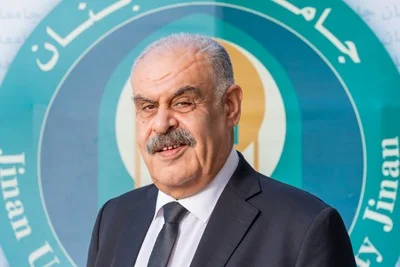
Dr. Abdul Hakim Ghazzaoui
Dean, Faculty of Education
Objectives
Objectives
أهداف الكلية
يأخذ المعلّم دور المستشار والمدرّب الذي يعمل بجد على تطوير عقول الطلاب ومعرفتهم، خاصة في عصر العولمة والتكنولوجيا، ويعمل على تشجيعهم على التفاعل والتعبير عن آرائهم من أجل مساعدتهم على تعلّم وتطبيق المفاهيم والنظريات في جميع المجالات. إنطلاقا من هذا الواقع فإن مهمة كلية التربية هي المساهمة بشكل جوهري وتخصّصي من خلال التعليم والبحث العلمي، في تطوير المعرفة عند المربين المسؤولين عن تلبية احتياجات ومتطلبات طلابهم.
Acquired Skills
The Acquired Skills at Graduation:
- Educational Supervision
- Management of a school or educational institution
- Teaching in schools or universities
- Educational planning
- Educational guidance and counseling
- Educational research
- Curriculum development and educational programs
- Dealing with students with special needs
Research Guide
Research Guide
| Edition | |
| Research Guide | En |
| Guide de Recherche | Fr |
| دليل الباحث | عربي |
2- الكلية/القسم
3- الدرجة
4- الاسم الثلاثي
5- الرقم الجامعي
6- العام الجامعي
Research Directions
Faculty of Education
E-learning between reality and limitations
- Practices and challenges of e-learning in creating a "distant presence" (for special needs people, kindergarten learners, and first or second cycle basic education learners).
- Reality and problems of e-learning and its repercussions on teachers (the teacher's e-learning skills, the teacher's role in the digital age, e-professional development for teachers in light of the digital age data, etc.).
- Advantages and disadvantages of distance learning and its repercussions on learners (psychological, educational, social, cognitive repercussions, etc.)
- Suitability of current educational curriculum for the digital learning process.
Psychological Approach to Digital Learning
- Parental influence and children’s psychological balance and stability during the digital learning process.
- Psychosocial and counseling approach to digital learning and assessment in some Arab and foreign countries
- Cultural and psychological challenges of digital learning in the context of globalization.
- Psychological and educational guidance to mitigate the disadvantages of digital learning.
Horizons of e-learning
- Utilizing e-learning to enhance the teaching and learning process
- Strategies to enhance learner participation in e-learning
- Enhancing learner motivation through communication on platforms
- E-learning and quality standards
Twenty-first century skills
- Designing Teaching for Learning in the 21st Century:
(When planning for education, does it take into account learners' attitudes, use of technology, preoccupation with thinking, and development of life skills?)
- Achieving the goals of the 21st century through the teaching-learning process.
- 21st century skills included in the educational curriculum:
(Evaluation of textbooks and analysis of their components if they include the skills required for students)
- Evaluation of final exam questions in a specific subject according to Bloom's and other classifications.
- Active learning methods and their role in developing the 21st century skills:
(Any of the 101 active learning methods would - if applied professionally in the classroom in any educational subject - affect the development of some 21st century skills.
Educational leadership between the present and the future
- Educational leadership and its anticipated roles in future schools:
(The concept of leadership, the concept of future schools, the shift in leadership roles at the level of teachers and principals, external and internal challenges facing the school, globalization, evaluation, systemic change, partnership, etc.)
- The role of strategic leadership and its impact on the organizational behavior of employees in the educational institution:
(The concept of strategic leadership, leadership with a clear vision for a better future, the concept of organizational behavior, the role of leadership in making the right decisions in order to motivate and empower employees in the educational institution, how to build good relationships that help creativity and benefit from human resources effectively, etc.)
- The future skills of educational leaders needed to create an incubating and stimulating environment:
(Human skills, interpersonal skills, visual / cognitive skills, technical skills, continuous training of educational leaders for future effective leadership, etc.)
Videos
Latest News
تكريم الأمّ في الجنان – صيدا
السبت ٢٢ مارس ٢٠٢٥
في أجواء التقدير والعرفان، نظّمت جامعة الجنان – فرع صيدا نشاطًا اجتماعياً بمناسبة يوم الأمّ، بدعوة من كلّيّة التربية، لتكريم...
Read Moreالجنان صيدا تخرّج الدفعة السابعة عشر
الخميس ٠٧ سبتمبر ٢٠٢٣
برعاية النائب الدكتور أسامة سعد، احتفلت "جامعة الجنان" بتخريج الدفعة السابعة عشرة من طلابها من فرع صيدا للعام الجامعي (2022-2023) وذلك في قاعة ...
Read Moreمادة التربية البدنيّة والرياضيّة
الثلاثاء ٠٩ مايو ٢٠٢٣
إنطلاقاً من أهميّة الرياضة ودورها على إنماء الشباب من النواحي البدنيّة والعقليّة والاجتماعيّة والنفسيّة، أدخلت جامعة الجنان "مادة...
Read Moreإبداعات تربويّة
الإثنين ١٩ ديسمبر ٢٠٢٢
نظّمت كليّة التربية في جامعة الجنان ندوة تفاعليّة بعنوان: "إبداعات تربويّة" وذلك في قاعة المؤتمرات بمُشاركة عميدة الكليّة الدكتورة "رنا...
Read More